
How to Critically Evaluate Your Own Work and Know When It’s Finished While Developing Your Own Color and Design Style in Abstract Art
Apr 17, 2026The process of creating abstract art is filled with expression and technical consciousness. The problem that many artists face is how to critically evaluate your own work and know when it’s finished, which can result in overworked or unfinished works. Meanwhile, learning how to develop your own color and design style in abstract art is critical in creating a unique visual identity. Devoid of a well-defined process, artworks may be directionless and unpredictable. The adoption of a balanced combination between appraisal methods and innovative experimentation is useful in enabling artists to hone their work. The purpose of Art and Success is to mentor artists by teaching them art basics in a systematic way and using hands-on techniques to make them feel confident in their artistic choices and come up with powerful abstract artworks.
Why Self-Evaluation Matters in Abstract Art
Self-evaluation assists artists in finding what works well and is perfect, and helps them make sound choices. It creates awareness and forestalls needless changes and shapes the creative process to meaningful and complete results.
Key Reasons to Evaluate Your Work
- Clarity in Artistic Direction
Self-examination assists artists in knowing the current state of their work in comparison to the initial perception. It makes sure that original decisions are made in support of a desired message, enhancing consistency and fortifying the ability to make decisions during the arts process. - Prevention of Overworking
Artists tend to keep on making unnecessary adjustments. The periodic review of work prevents a lot of readjustments, which can disrupt the composition's substance, and helps to maintain balance, thus remaining able to retain the original emotional appeal of the artwork. - Improved Technical Awareness
Technical skills are improved through analyzing such elements as balance, contrast, and composition. Such practice contributes to the development and enables artists to become more familiar with how to critically examine their own production and realize when it is complete. - Confidence in Finishing Artwork
Evaluation of oneself develops self-confidence towards the realization of completion. Artists feel more at ease committing works to finish and are less hesitant, thereby opening up better creative processes with more definite artistic results. - Support for Style Development
Regular assessment pinpoints trends and preferences. This knowledge can be applied to how to form your own style of colors and designs used in abstract art, so that artists can create more agreeable and memorable work.
How to Critically Evaluate Your Own Work and Know When It’s Finished
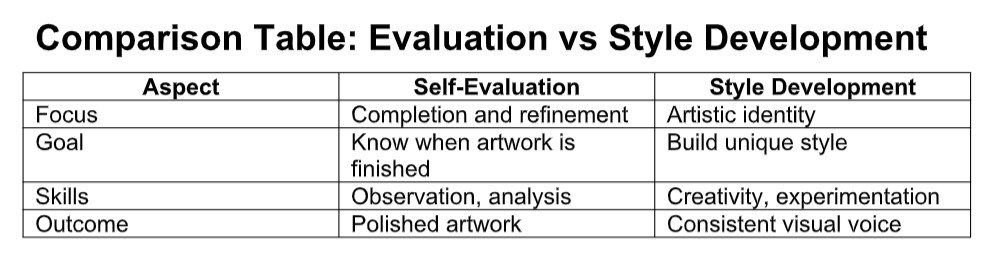
An organized evaluation will enable artists to critically evaluate their work. It eliminates emotional attachment and constitutes a simple structure by which you can determine when a piece of art has achieved its desired purpose.
Practical Evaluation Checklist
- Step Back for Objectivity
Looking at artworks at a distance helps artists to view the entire artwork as a whole. This view demonstrates unbalanced situations and gaps requiring polishing, enhancing the clarity of using such judgment to complete effectively. - Analyze Composition and Balance
Ensure that elements are evenly distributed. Composition gives the picture a formal balance to follow the direction of the eyewitness, as well as to strengthen the whole composition of the work. - Evaluate Emotional Impact
Ask yourself, does the artwork convey the feeling that it is meant to convey? The abstract art requires clarity in emotions, and this is what would tell whether the artwork is able to provide the meaning it intends. - Compare with Original Intent
Go back and review the first notion or thought. As long as the art matches the initial idea, it is usually a good sign that the art is finished. - Assess Need for Further Changes
Does it help or does it destroy the work by any further editions? This is a very important step in learning how to critically evaluate your own work and know when it’s finished.
How to Develop Your Own Color and Design Style in Abstract Art
It takes practice and trial and error to develop a personal style. Artists need to experiment with color combinations and design qualities and find out what they see as patterns in their distinctive creative voice.
Steps to Build a Personal Style
- Experiment with Color Palettes
Limited palettes also promote a better comprehension of how colors interact with one another. It assists artists in exploring ways of blending, which appeals to their vision of art and their emotional release. - Study Color Harmony Principles
Understanding complementary and analogous colors enhances composition. The principles determine the effective use of color and enhance the effect of the visuals in abstract art. - Repeat Successful Techniques
Restating strategies that have a good effect creates consistency. With time, repetition helps to develop an identifiable art style. - Analyze Influences Carefully
The examples of other artists are inspiring but are not to be imitated. This method favors originality as well as reinforcing creative development. - Maintain a Visual Journal
Noting down ideas, experiments, and observations is useful in following progress. This method is critical to learn how to develop your own color and design style in abstract art.
Benefits of Mastering Evaluation and Style Development
Combining assessment and style building contributes to artistic development. It brings about a balance between structure and creativity, enabling artists to deliver a work that is creative and, on the other hand, elegant.
Key Benefits
- Stronger Artistic Identity
Creating a uniform form is what makes an art identifiable. It assists artists in creating a distinguished presence and reaching out to audiences more easily. - Improved Decision-Making Skills
Assessment methods help make faster and more assured decisions. Artists waste less time questioning and use it in the creation of something meaningful. - Higher Quality Artwork
Technical awareness coupled with creativity will result in better and more refined works that convey messages efficiently. - Reduced Creative Frustration
Uncertainty is riddled out through structured processes. Artists are more confident in their work and have fewer creative blocks. - Long-Term Artistic Growth
Learning how to critically evaluate your own work and know when it’s finished, as well as how to develop your own color and design style in abstract art, would guarantee ongoing development.
Conclusion
Knowledge should be balanced between the freedom of creativity and systematic judgment in learning abstract art. Knowing how to critically evaluate your own work and know when it’s finished helps avoid overworking and develop confidence in decision-making in art. Simultaneously, training on how to develop your own color and design style in abstract art would aid in forming a recognizable and unique spectral appearance. Through practice, careful experimentation, and encouragement of Art and Success, artists are able to master their craft, create something insightful and significant, articulate, and something personal, intentional, and personal as well.
FAQs
1. Why is self-evaluation important in abstract art?
Self-assessment enables artists to discover what strengths they have, how they can develop their technique, and how they can decide when a work is complete with confidence, supporting how to critically evaluate your own work and know when it’s finished.
2. How can artists develop a unique abstract style?
The experimentation, exploration with colors, and repetition in art help artists to create their own unique style of using colors and creating designs, which enhances how to develop your own color and design style in abstract art.
3. What are the signs that an artwork is finished?
A finished artwork feels balanced, communicates clearly, and requires no further changes, helping artists understand how to critically evaluate your own work and know when it’s finished.
FREE GUIDE
Five Must Have Studio Tools Each Under $20
Sign up now to get instant access to the free guide that reveals the 5 most important tools that I always have by my side!
We hate SPAM. We will never sell your information, for any reason.
