
Mastering Advanced Color and Design Concepts for Mixed Media Painting
May 22, 2026Mixed media painting is a fantastic art form, allowing artists to fuse a variety of mediums, textures, and techniques into a singular, expressive work. While simply combining different art supplies may suffice for beginners, a deeper knowledge of color harmony and composition can dramatically enhance the visual balance and emotional impact of the artwork.
Experienced artists, through studying layered color relationships, the placement of focal points, the use of movement, and the interaction of different textures, produce much stronger professional work. The advanced color and design concepts for mixed media painting described below can boost an artist's confidence and help them create more sophisticated visual narratives in contemporary abstract and mixed media pieces.
Advanced Color and Design Concepts for Mixed Media Painting
The advanced color and design concepts for mixed media painting include the following:
1. Utilize Color Warmth to Evoke Emotion:
In mixed media art, warm and cool color temperatures can be used to set the mood of a painting. Warm hues often represent energy, passion and movement while cooler colors are calming and meditative, bringing balance and depth to the piece. Artists who experiment with contrasting temperatures find it possible to create interesting visual focal points and add tension within the artwork, resulting in a more engaging piece. Playing with these temperatures carefully can also add depth, dimension and improve visual storytelling within a multilayered composition.
2. Emphasize Visual Hierarchy Through Compositional Balance:
Visual hierarchy dictates what part of the artwork the viewer's eye is first drawn to. Artists use bold shapes, color contrasts, and concentrated textures to create clear focal areas in their work, while less dominant shapes and elements that complement the focal points help guide the viewer through the composition. A strong sense of visual hierarchy improves clarity and can make an otherwise chaotic-looking mixed media painting look very professional and organized.
3. Layer Opaque and Transparent Colors Together:
Artists often begin their work with translucent washes that help establish atmospheric depth and create smoother transitions, while more opaque paint marks are added to give greater visual weight to different parts of the composition. Experienced artists may incorporate layers of each in turn to build up their mixed media artwork without disturbing its underlying color harmony.
4. Add Texture intentionally and with a purpose:
All added texture within a mixed media piece should enhance the composition. Collage materials, modelling paste, and palette knife texture are commonly used to improve movement and visual rhythm and can give depth and interest to an artwork. Controlled and well-placed texture can even lead the viewer's eye through the painting, amplifying the emotional content of abstract and mixed media artwork.
5. Strengthen Unity with Repeated Design Elements:
Repeated colors, shapes or patterns help unite the different parts of the mixed media piece, resulting in a stronger overall composition. Often, the repetition is subtle in form but easily perceived by the viewer and helps prevent a composition from feeling fragmented, bringing it all together.
6. Utilize the Power of Negative Space:
Empty or uncomplicated spaces in the artwork give the painting room to breathe, helping to break up busy, textural areas and focus attention on areas of importance. Many professional mixed media artists understand that restraint can increase the emotional power of a piece and make the positive space look stronger in comparison.
Art and Success lets you know step-by-step color and design tutorial for artists.
Affordable Art School Options for Creative Artists
Choosing an Affordable Art School for Skill Development
An affordable art school will enhance an artist's technical and creative abilities and improve career prospects, without burdening them with excessive debt. There are many universities and art schools that now offer flexible online programs, specific courses or workshops and a variety of painting options for artists of all experience levels.
- Opt for Flexible Learning:
Programs such as part-time classes, online workshops and self-paced courses are commonly available in affordable art school programs and can make balancing education with existing work or family commitments much easier.
- Compare Curricula Carefully:
Artists should take care to research and compare courses before enrolling at an affordable art school. Strong curricula should cover color theory, composition, mixed media techniques, art history and portfolio development, advanced color and design concepts for mixed media painting among others.
- Research the Instructors:
It is helpful to understand the artistic background and teaching philosophy of the instructors, as experienced teachers provide valuable insights, advice and critiques that will help boost creativity and confidence.
- Take Advantage of Online Art Platforms:
High-quality online courses and art schools have a more affordable price tag and will often connect you with a variety of internationally renowned artists.
- Seek out Portfolio Development opportunities:
Developing a professional portfolio will be essential to obtaining opportunities such as exhibiting your artwork or freelance work. Affordable schools that are dedicated to portfolio development will give you an advantage.
Step-By-Step Color and Design Tutorial for Artists
Simple Color and Design Process for Better Artwork
Artists will improve more quickly if they stick to specific painting methods and study color harmony, composition design and layering techniques.
Step 1: Define Your Limited Color Palette:
Before you even pick up your brushes, select three to five dominant colors that will form the foundation of your composition. The limited palette will bring together colors for a harmonic result and prevent overwhelming decisions about which colors to use when you are creating your mixed media piece.
Step 2: Sketch Thumbnail Composition Designs:
The small sketches will allow you to work out the composition as a whole without much effort, testing the balance of colors, focal point, shapes and the general flow of your piece. Working out the composition in miniature sketches is an essential step for confident work.
Step 3: Paint your Large Shapes:
The primary shapes within your composition will form its foundation. Focus on large movements and prominent forms when you begin, then move on to adding finer details or texture.
Step 4: Gradually Build up Layers:
Layer transparent paint, collage elements, various textures and mark-making to add depth and dimension to your artwork. Layering gradually is key to a strong composition that will maintain its color harmony.
Step 5: Enhance Contrast and Focal Points:
You can draw attention to areas that are most important within the composition using light and dark values, different textures and color temperatures, which will create an exciting, high contrast artwork that the viewer is drawn to.
Step 6: Refine Balance and Detail:
From afar, critically analyze your artwork to assess the overall composition, the balance of different areas and any sense of movement within the artwork. Add small finishing touches such as subtle highlights, repeated colors, and carefully considered texture adjustments.
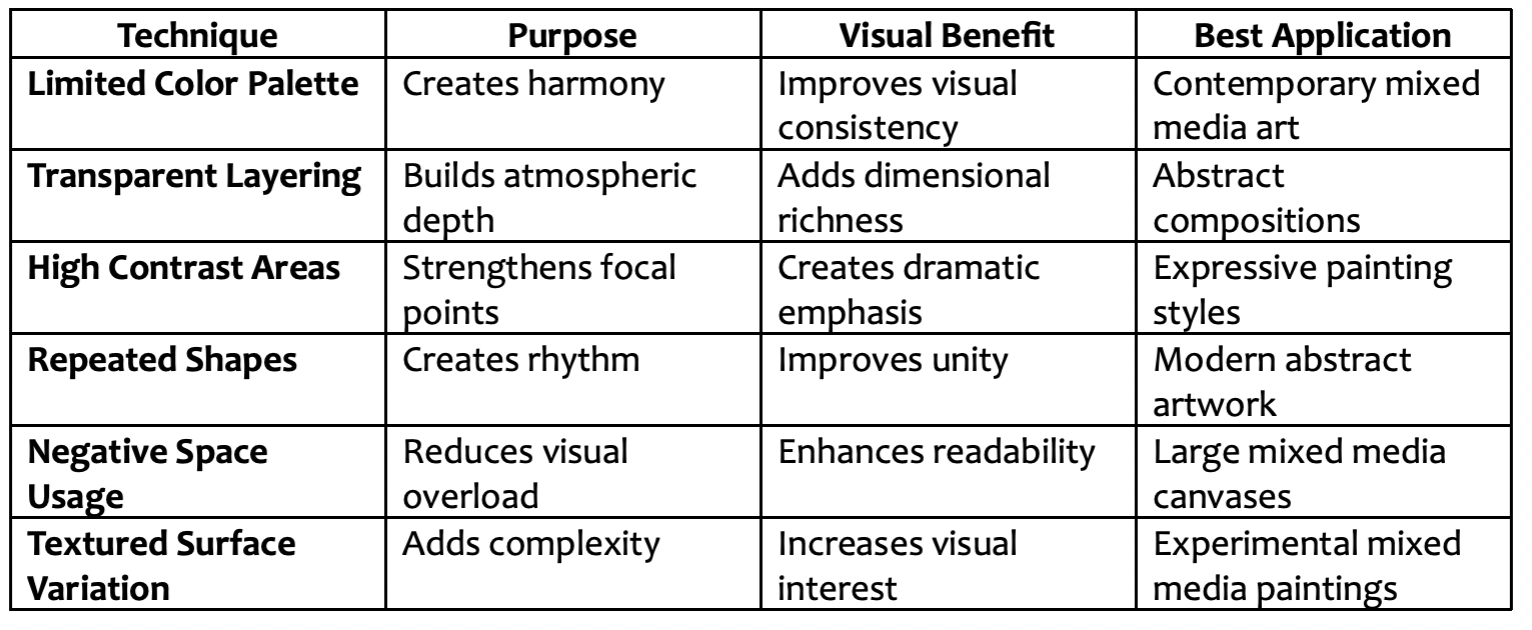
Mixed Media Color and Design Strategy Table
FAQs about Mixed Media Color and Design
What is the importance of color theory in mixed media painting?
Color theory enables artists to produce artworks that exhibit visual harmony, depth and movement while also incorporating powerful emotional and structural aspects that balance layered mixed media composition.
How can artists improve design structure in abstract compositions?
The most useful approach for enhancing abstract compositions is consistently practicing balance, placement of focal points, movement, contrast and mindful use of negative space.
Are affordable art schools effective for learning professional painting skills?
Yes. Affordable art school programs offer solid technical training, useful portfolio advice and creative enhancement that is very beneficial to burgeoning artists.
Conclusion
Learning advanced color and design concepts for mixed media painting can greatly improve an artist's ability to communicate their vision through mixed media artwork, adding emotional resonance, a sense of professional polish, and improved compositional balance. Through structured approaches, accessible art education options, and dedicated practice of step-by-step color and design tutorial for artists, artists will gain the confidence to produce more original, impactful and emotionally evocative mixed media pieces. Art and Success lets you master the skills and know the concepts very well!
FREE GUIDE
Five Must Have Studio Tools Each Under $20
Sign up now to get instant access to the free guide that reveals the 5 most important tools that I always have by my side!
We hate SPAM. We will never sell your information, for any reason.
