
Mastering Color and Design Techniques for Abstract Painting: A Journey into Visual Harmony
Dec 01, 2025Understanding Color Harmony in Abstract Art
The emotional heartbeat of abstract painting is color harmony--color harmony dictates the feeling, motion, and breathing of a work of art. So, mastering color and design techniques for abstract painting is necessary!
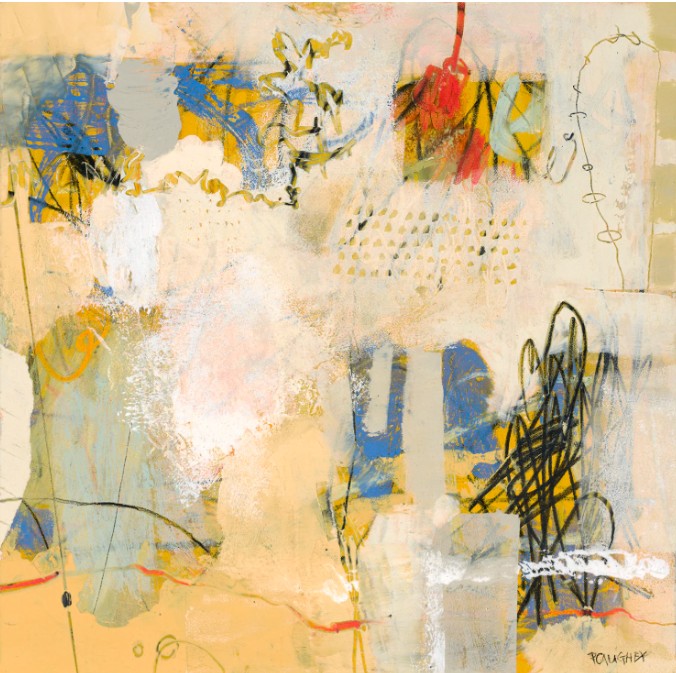
- Complementary Color Dynamics: When opposite colors, such as red and green or blue and orange, are placed, they increase the energy and create tension and vibration, which attract attention.
- Analogous Harmony: The similar colors next to yellow, orange, and red strike a note of unity and tenderness, which can be used to soothe or meditative compositions flowing across the canvas softly.
- Triadic Balance: The use of three colors that are not close to each other, violet, green, and orange, produces vibrant balance without being tedious or binary.
- Temperature Play: Warm tones are light, passionate, and expansive, whereas cool tones are deep, reflective, and distant. Emotional equilibrium is regularly alternated in successful abstraction.
- Value Control: Change of light and darkness, referred to as tonal value, guides the eye of the viewer and creates mood without the use of recognizable shapes.
It is not really about color harmony and design principles for abstract painting but rather about resonance. A painting is complete even in the absence of recognizable shapes when colors play harmoniously with each other. Those abstract painters who possess the art of harmony can produce works that create a sense of rhythm, silence, and emotion, without even having to show something, but as a symphony of emotions.
Want to master these principles? Well, Art and Success will help you learn the best way to develop visual balance and harmony through color and design in painting!
Applying Design Principles for Strong Composition
Composition is the unseen framework that contains emotion in abstract art. Mastering color and design techniques for abstract painting includes learning the main principles for a good composition.
- Balance: Visual balance and harmony through color and design in painting is created by the way shapes and colors are spread; the balance can be symmetrical, which brings peace, or asymmetrical, which brings activity and inquisitiveness.
- Emphasis: Any abstract work is complemented by a point of interest, a visual highlight attained by a blaze of strong color, heavy texture, or bold form, that puts the viewer in touch with the work.
- Rhythm and Repetition: As music employs beats, the abstraction employs repetition of colors, lines, or textures to produce movement and flow that guides the eye in a harmonious movement.
- Unity and Variety: Unity is created by the repetition of elements that connect the composition, but Variety is created by creating a shift in the line weights or even a contrasting color.
- Directional Flow: The grading of lines, shapes, and color softly guides the eye, and even the non-representational forms have narrative leads.
These color and design strategies for expressive abstract paintings turn the unconscious strokes of the brush into conscious forms. The abstract art form would be confused with the visual, and the mechanical with spontaneity. With the partnership of design and instinct, control and freedom are achieved in the artwork. The combination of this synthesis is what has made abstract painting so appealing over the years; every work is living but composed meticulously under the surface.
Exploring Expressive Use of Color
Color is no pigment--it is passion in a form. It helps maintain visual balance and harmony through color and design in painting.
- Psychological Associations: Every color is emotional. Red is full of vitality and urgency; blue is full of tranquility, yellow is full of optimism, black is full of mystery, and white is full of clarity and openness.
- Layering and Transparency: The introduction of luminosity created by building colors in glazes or thin washes creates the illusion of the light that has been emitted inside the painting. This method improves the emotional richness.
- Saturation Control: Due to the high saturation, intensity, and energy are grasped, and low saturation in the muted tones gives the feeling of nostalgia and delicacy. The combination of both defines the intensity of the mood.
- Intuitive Contrast: The unexpectedness of unexpected pairings, turquoise with maroon or chartreuse with violet, gives the piece of art a dramatic and intriguing look and makes it unpredictable but asymmetrical.
- Personal Palette: Each artist gets to know color in his own way. An awareness of personal preferences, whether toward neutral earthy color, electric color, or monochrome, develops a signature style and emotional underpinning.
Abstract painters usually consider color as an object in itself, and color can narrate emotional tales. They can invoke feelings of tension, joy, serenity, or conflict through intuition and experimentation. The color of the picture is a language of the painter, immediate, passionate, and endless. It is not the precision, but the emotional truth that one must master.
Art and Success offers classes that help art enthusiasts know color and design strategies for expressive abstract paintings!
Table: Key Elements of Abstract Painting
|
Aspect |
Description |
Artistic Benefit |
|
Color Harmony |
Strategic pairing of hues for balance and contrast |
Evokes specific emotional responses |
|
Design Principles |
Framework of composition, rhythm, and unity |
Adds structure and flow to abstract forms |
|
Expressive Color |
Emotional use of hues, transparency, and saturation |
Enhances visual depth and individuality |
|
Balance & Harmony |
Equal distribution of visual weight |
Creates comfort and aesthetic equilibrium |
|
Emotion Integration |
Blending feeling with form and structure |
Produces authenticity and emotional depth |
Concluding Note!
Learning how to use color and design to create abstract paintings provides infinite opportunities for discovery in art. It makes paint poetry, one color, one line, one gesture will be a part of a symphony of visual images. The abstract painters put their emotional touch or inject life into the non-representational art through harmonious intent, compositional sensitivity, and emotionality. The combination of intuition and intellect changes the confusion into simplicity and heart into visual rhythm. It is the power of color harmony and design principles for abstract painting that help uplift hearts, to provoke perception, and to put in mind the viewer that beauty is sometimes beyond the lines of form and definition. The team of Art and Success is there to help you!
FAQs
Q1. Why is the harmony of colors important in abstract art?
It establishes emotive harmony and togetherness throughout the piece.
Q2. Does emotion determine the choice of color?
Yes, feelings tend to recede in the determination of hue, value, and intensity.
Q3. What is the way to balance the visuals of artists?
Through the careful placement of visual harassment and contrast throughout the canvas.
Q4. How can one enhance the skills of creating an abstract painting?
Learn color theory, study masterworks, and practice every day. Intuition is perfected through experimentation, and confidence is developed.
FREE GUIDE
Five Must Have Studio Tools Each Under $20
Sign up now to get instant access to the free guide that reveals the 5 most important tools that I always have by my side!
We hate SPAM. We will never sell your information, for any reason.
