
Using Color and Design to Enhance Abstract Art Compositions
May 22, 2026Visual emotion, movement and artistic balance are crucial to abstract art. Abstract compositions are structured with strong color relationships and thoughtful design to bring about more expression and visual interest. It allows artists to produce artwork with deeper emotion and professional quality by knowing the interaction between colors and shapes, textures, and spacing. Learning to go ahead using color and design to enhance abstract art compositions will help artists gain creative direction and build more recognizable artistic direction in contemporary abstract painting styles through the use of color and design. This helps artists like you know how to develop your own color and design style in abstract art.
Using Color and Design to Enhance Abstract Art Compositions
1. Build Strong Emotional Impact with Color Harmony
Abstract artwork is emotionally consistent throughout due to color harmony. Warm colors tend to evoke strong emotions, and cool colors promote a serene, calm atmosphere. The use of color is crucial for creating a sense of purpose in abstract compositions. In abstract art, the use of a limited color palette is a common technique that enhances the overall visual unity and emotional impact of the artwork. A limited color palette is a technique often employed by professional abstract artists to create visual unity and emphasize the overall mood or narrative of the piece.
2. Use Contrast to Create Powerful Focal Points
Contrast is useful to make important areas pop out right away in abstract paintings. Darker and lighter values, rough and smooth textures, warm and cool colors are frequently used in conjunction with one another by artists for visual emphasis. Good contrast will lead the eye through the image, providing movement and drama. Abstract artworks also don't seem flat or lacking in direction when there are strong focal points.
3. Organize Shapes and Space for Better Composition
Careful positioning of shapes and textures, and empty space, is very important to successful abstract compositions. Negative space will create a visual pause to see space and allow a focal point to be more noticeable. The large shapes are stable forms, and the small repeated shapes are active, moving forms. The spatial arrangement is balanced, which facilitates the readability of the text and creates a more professional and purposeful appearance of abstract paintings.
4. Layer Colors and Textures Strategically
Layering helps to create depth and complexity in abstract art compositions. Transparent paint washes and collage pieces, ink details and textured materials all interact with one another to add dimension and richness. With careful layering, artists can create atmosphere while not overpowering the scene. The strategic layering also allows colors to blend naturally and adds to the overall visual experience.This helps you understand how to develop your own color and design style in abstract art.
5. Control Movement Through Design Direction
The viewer's eye is directed through an abstract painting by movement. Repeated patterns, curved lines and directional brushstrokes provide overall visual flow throughout the composition. Animations that are alive and strong hold viewers' attention for longer and help the viewer connect with the art emotionally. Controlled design direction also impacts storytelling and helps to avoid visual confusion in abstract paintings with very textured surfaces.
6. Maintain Unity Across Mixed Elements
The use of a lot of colors, textures, and experimental techniques is very common for abstract artwork. All elements are connected, not chaotic, with unity. If the colors, shapes, or textures are repeated throughout the painting, it will help keep it consistent. An artist's knowledge of using color and design to enhance abstract art compositions can help him create more balanced images and distinctive art styles.
How to Develop Your Own Color and Design Style in Abstract Art
Knowing how to develop your own color and design style in abstract art will take experimentation, consistency, and an in-depth knowledge of the relationship between colors and forms. It helps artists to establish a visual identity and gain recognition. Creating a recognizable visual pattern can help build an artist's creative confidence and recognition.
1. Experiment with Limited Color Palettes
Artists will find it easier to comprehend harmony, contrast, and emotion when using fewer colors. Tight colour palettes also lend a sense of uniformity in the visual language of abstract compositions. Signature color palettes are often utilized repeatedly by professional abstract painters to create a well-known painter's style and/or a deeper connection with their audience.
2. Study Emotional Responses to Different Colors
All colors evoke psychological and emotional responses. Strong reds can convey intensity, while subdued blues can instill a sense of calmness and contemplation. Emotional colour effects can make artists make more conscious decisions about their work. Emotional color psychology can assist abstract painters in conveying more meaning without the use of recognizable forms.
3. Develop Signature Shapes and Textures
For the abstract artist, the consistent use of visual elements allows him to create a personal identity. Some artists concentrate on geometric patterns, while others will opt for the organic brushstrokes or layered textures. Reinforcing signature characteristics from one piece to another allows for artistic recognition and reinforces a creative direction in art over time.
4. Practice Composition Through Small Studies
Thumbnail sketches and small experimental paintings enable artists to quickly explore design concepts before developing larger paintings. These studies enhance the knowledge of spacing, balance and focal point placement. Frequent composition practice also assists artists in discovering their individual likes/dislikes and recurring patterns in the visual process of their abstract paintings.
5. Analyze Professional Abstract Artists Carefully
By examining the works of successful abstract artists, painters can learn advanced color harmony, movement, layering and structure in painting. By looking at professional art, you will become more aware of technical aspects and gain inspiration for new ideas. But it is important to artistically develop inspiration rather than simply copying the styles or compositions of other artists.
6. Create Consistently to Refine Artistic Style
The formation of artistic identity is a process that takes time and the regular performance of artistic activity. By being consistent, artists can help fine-tune their color selections, composition abilities, and find their own visual favorites without having to seek them out. Through repeated experimentation, an increasingly confident, familiar and emotionally true abstract style of art develops with greater creative originality over time. Using color and design to enhance abstract art compositions will improve your artistic style.
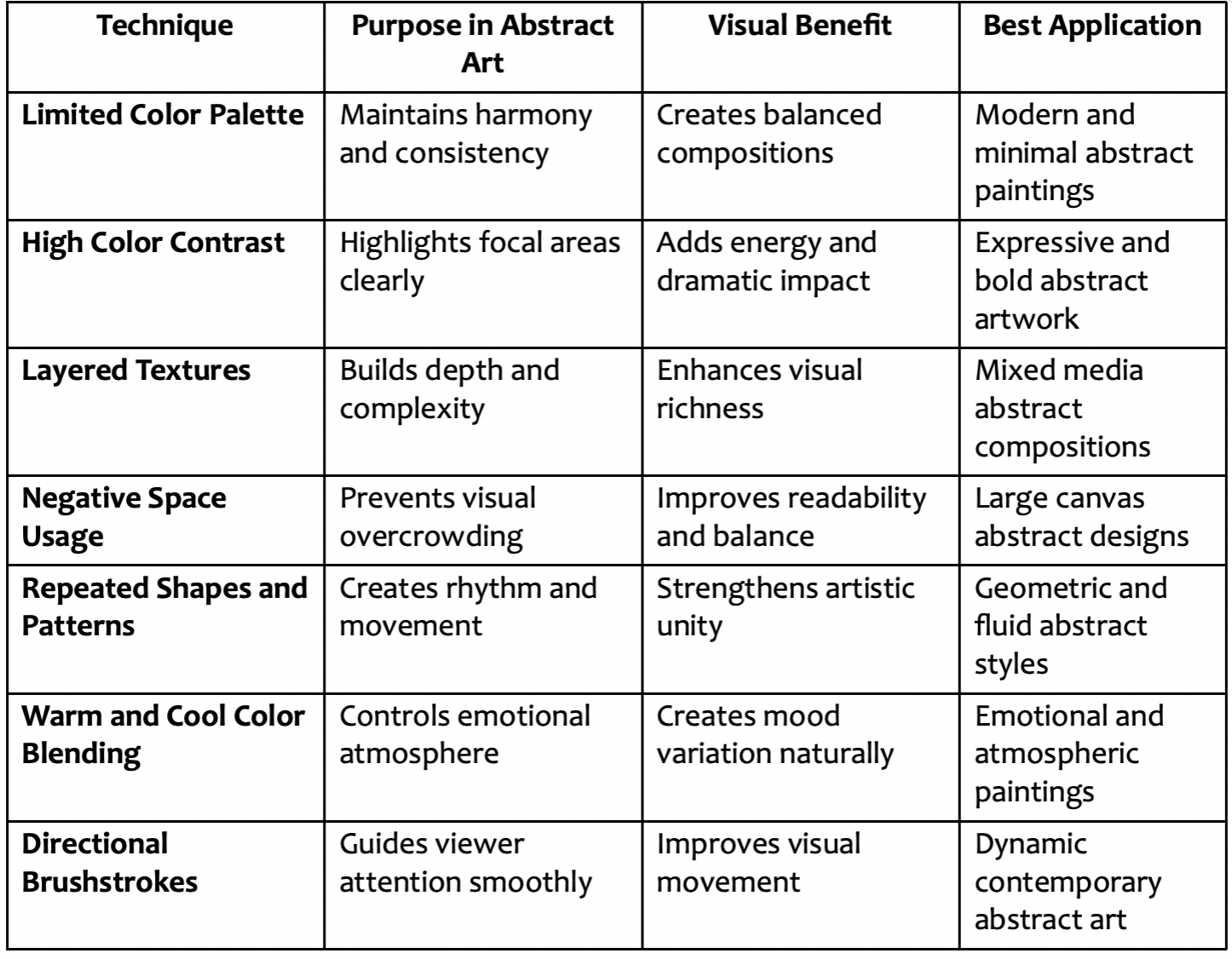
Abstract Art Color and Design Techniques Table
Conclusion
Using color and design to enhance abstract art compositions gives artists a valuable guide to creating more expressive, balanced and visually appealing artworks. Having a grasp of composition, movement, texture and color harmony enhances emotional storytelling and enhances professional quality. For artists seeking to know how to develop your own color and design style in abstract art, experimentation is key, as is consistency and purposeful art-making decisions. With good color relationships and design skills, a unique artistic style emerges that is original, memorable and interesting. Art and Success is where you must go to master abstract painting concepts.
FAQs About Abstract Art Color and Design
What is the importance of color in abstract art compositions?
Color is used to evoke emotion, balance and movement in abstract paintings. An effective color harmony makes compositions more purposeful, expressive, and engaging to the viewer.
How can artists develop their own abstract art style?
Consistent use of limited color palettes, experimentation in the layout, and limited use of signature textures, shapes, and design elements can help artists develop their own styles.
Why is design structure important in abstract painting?
Colors, textures, and shapes are used to create balanced compositions in design structure. Within abstract artwork, structure enhances the focus on points, the flow of the image, and the overall artfulness.
FREE GUIDE
Five Must Have Studio Tools Each Under $20
Sign up now to get instant access to the free guide that reveals the 5 most important tools that I always have by my side!
We hate SPAM. We will never sell your information, for any reason.
